

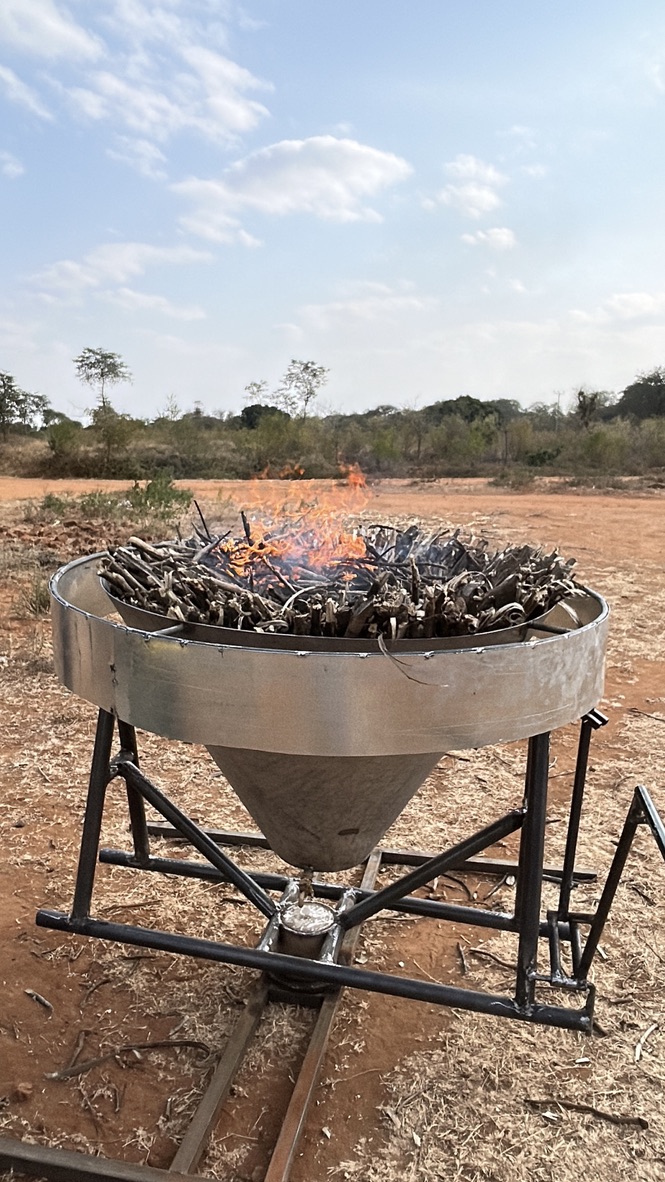
In July 2025, the Consuming Carbon team came to Wamunyu, Machakos County, to run an artisan biochar pilot with local farmers and the Farmer Care Cooperative. The experiment was designed to answer a practical question: can high-quality biochar for regenerative agriculture and carbon removal be produced using locally built infrastructure and locally available feedstock — no imported technology required? The answer, after three days of fabrication and burning, was yes.
This is the field story of how that happened, what we learned, and where the project goes next.
Building a Kontiki kiln with local materials
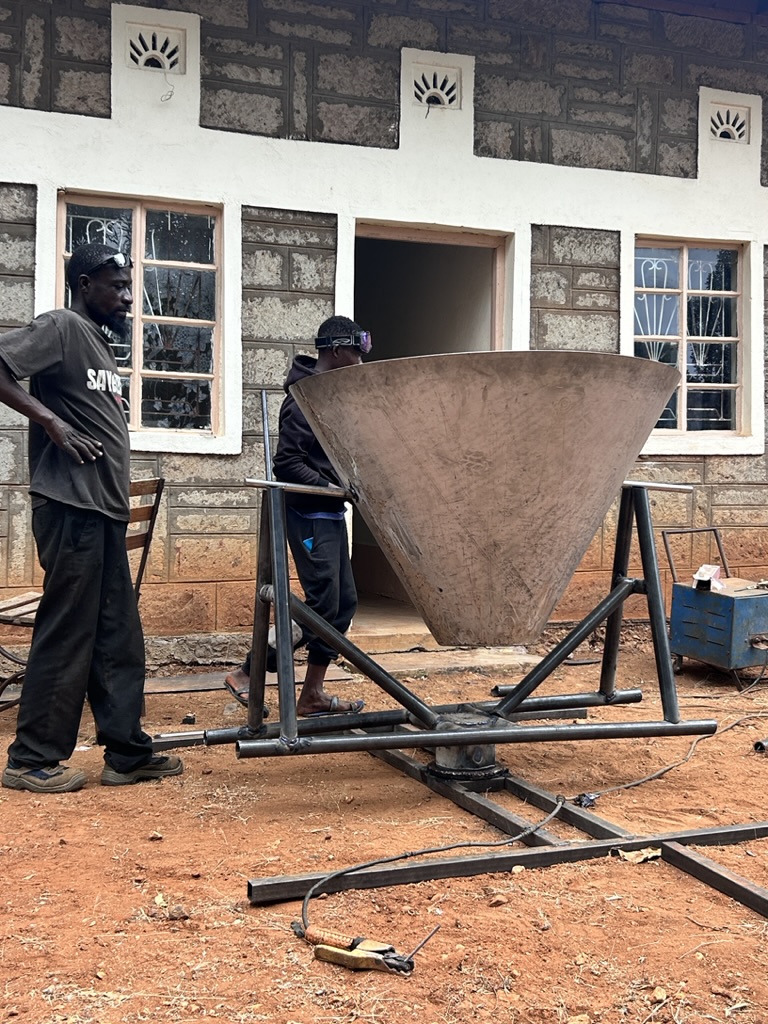
For this pilot, we fabricated a Kontiki-style flame-cap kiln on site using materials sourced from local metalworkers. The design is intentionally simple: a conical metal vessel that channels oxygen downward and allows woody biomass to pyrolyse cleanly with minimal smoke. It is repairable and affordable — the kind of technology a rural cooperative can maintain without outside expertise or imported parts.
Working side by side with local metalworkers, we built the kiln by hand — checking welds, fitting the drain valve, and testing the frame for stability before moving it to the burn site.
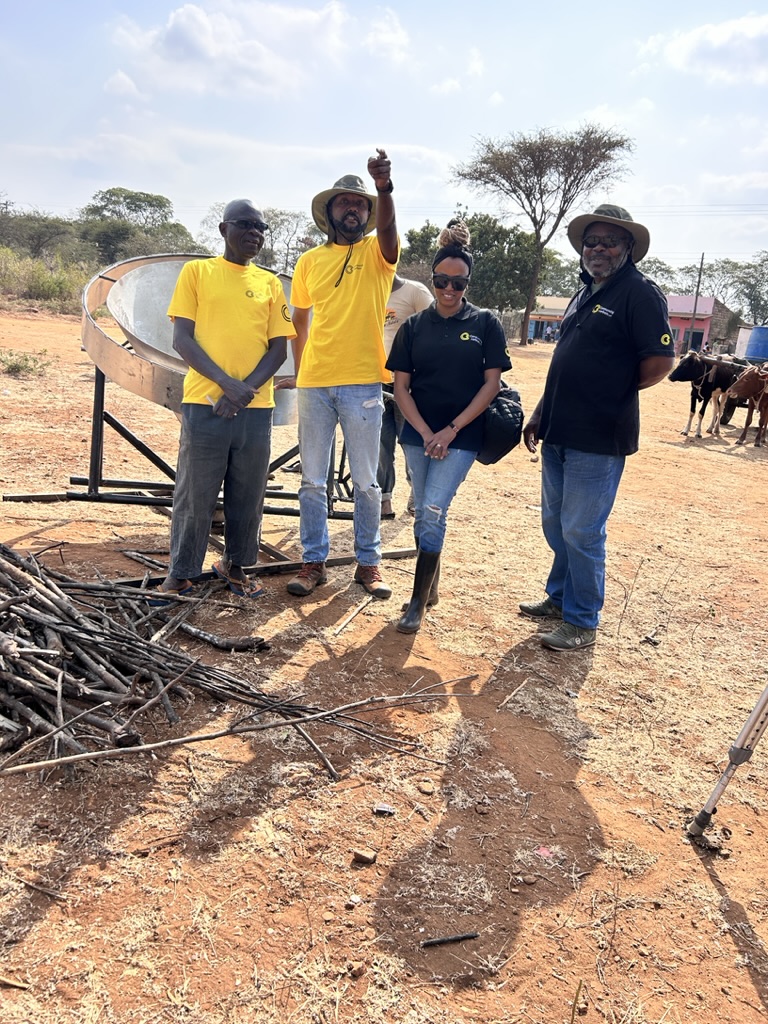
Working side by side with farmers, we sourced feedstock from the land itself: woody residues, dried branches, pigeon pea stalks — material that would otherwise accumulate as a disposal burden or be burned in open air. Turning that waste stream into a resource is part of the point.
Loading and firing
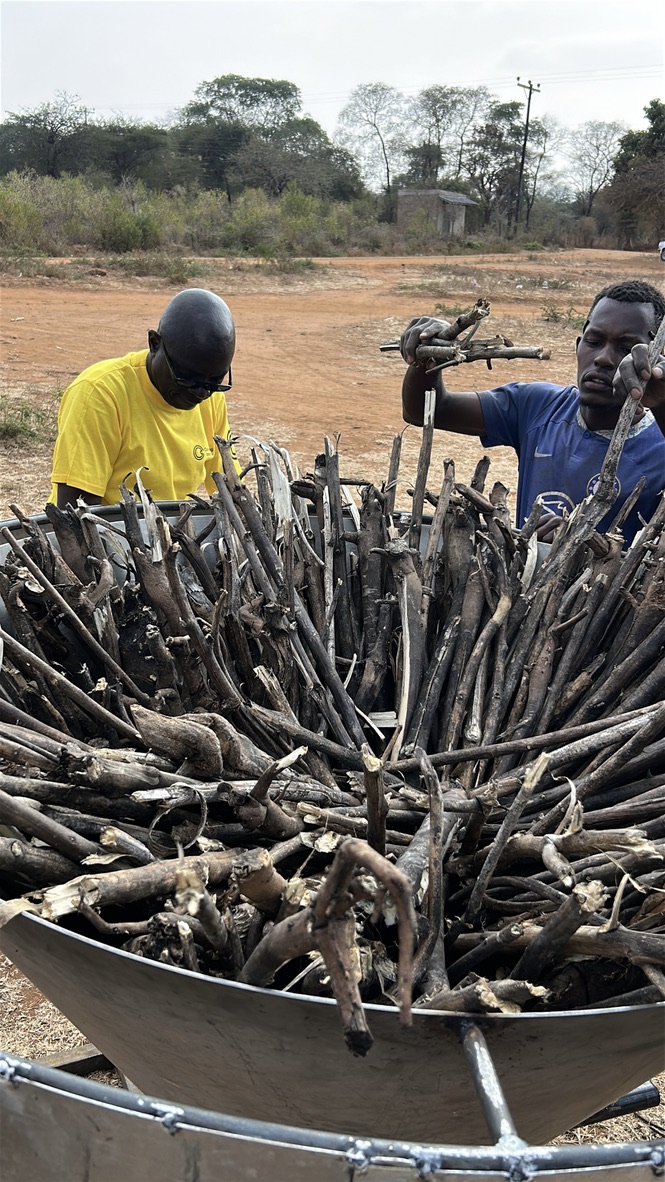
Loading a Kontiki kiln is skilled work. The biomass needs to be arranged so that airflow is even and the char layer builds from the bottom up. Too loose and you get incomplete combustion; too dense and you smother the reaction before it converts properly. The farmers who joined us picked it up quickly.
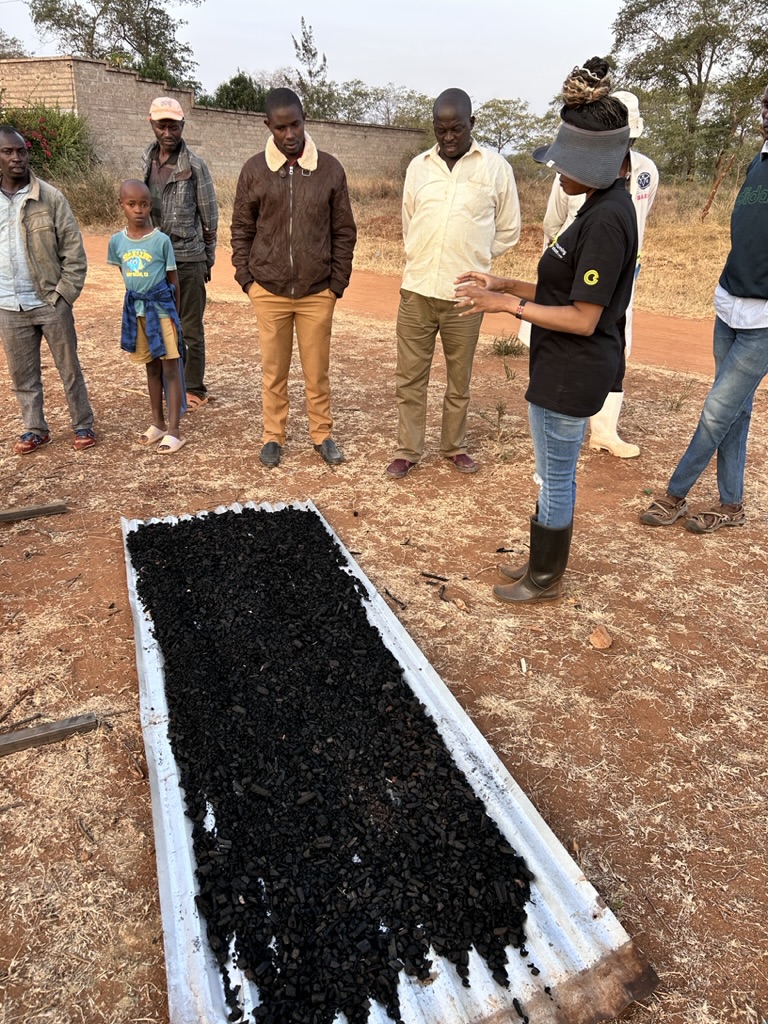
Once loaded, the team managed the burn to achieve clean, efficient pyrolysis. The Kontiki design produces a visible flame at the rim as syngas burns off — a reliable sign that conversion is proceeding correctly. After the material had carbonised, we quenched the char with water to stabilise it and stop oxidation, then spread it on metal sheeting to cool before field application.
What comes out of the kiln
The resulting artisanal biochar looks like charred wood because it is charred wood — at the molecular level. Plant carbon converted into a recalcitrant, porous structure that soil microbes can colonise and that will persist in the ground for centuries rather than decomposing back into CO₂. That permanence is what makes biochar relevant to carbon removal.
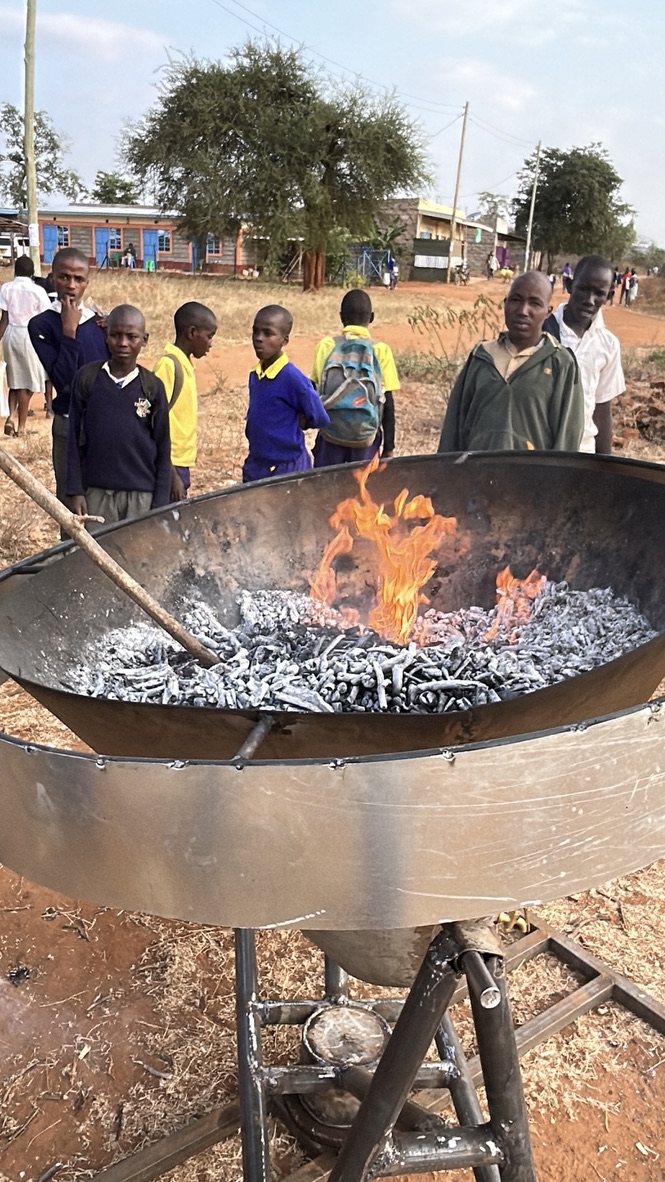
Schoolchildren from the surrounding area gathered to watch — an unscripted reminder that what we build here will matter to this community for a long time.
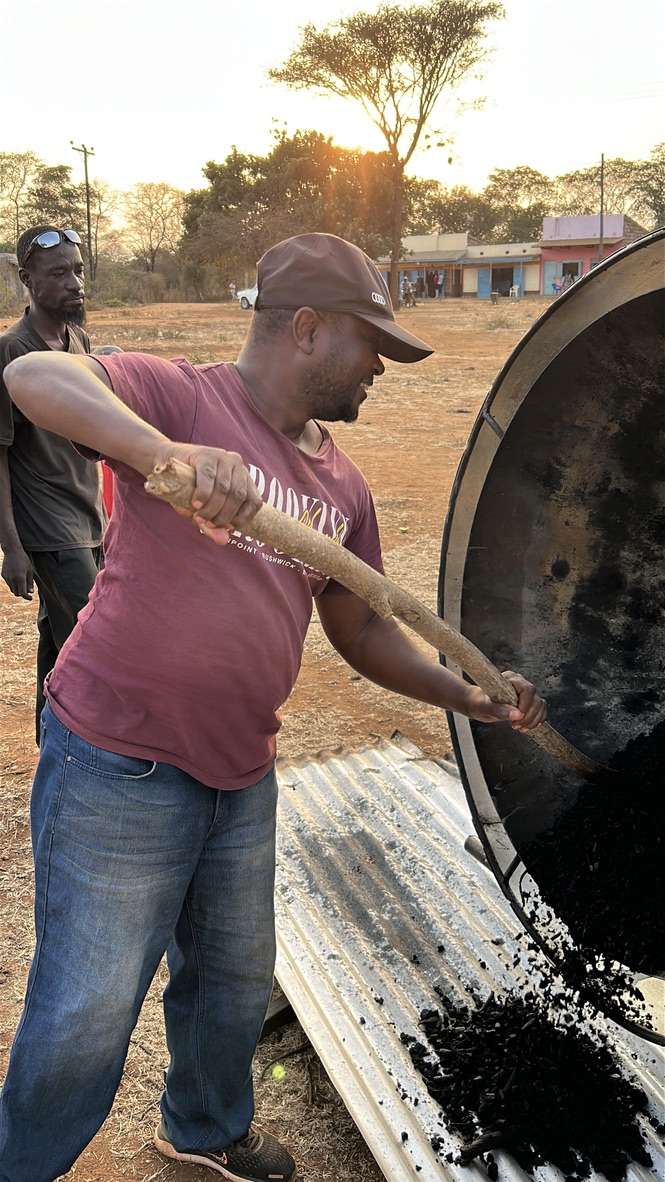
At the end of the burn, the char was shovelled out onto corrugated metal sheeting to cool and be inspected before field application. The quench is a satisfying moment — the acrid smoke is gone, and what remains is stable, dry, and ready for the soil.
What biochar does to soil. Biochar does not feed plants directly — it acts as a habitat and water reservoir for the microbial communities that do. Its porous structure holds both moisture and nutrients in the root zone, reducing leaching and keeping more of each rainfall in the soil rather than running off. In semi-arid conditions like Wamunyu, those mechanisms matter enormously.
First applications on the founder's land
The first batch of biochar from this pilot was applied on farmland owned by Consuming Carbon's founder — who is also a local farmer from Wamunyu, with a personal stake in the project's success. This gave us the opportunity to closely track how the biochar performs in real conditions: soil that has been under cultivation for years, where structure and moisture retention are the primary constraints on yield.
Early observations have been positive. We have seen improved soil aggregation, better water retention after rainfall, and healthier crop emergence in treated areas. These are early results — biochar's full agronomic benefit typically develops over multiple seasons as it integrates into the soil microbial community. But the direction is right.
The path to verified carbon credits
The Kontiki kiln we built does not yet meet Puro.earth's technology requirements for formal carbon crediting. As we move into the crediting phase of the Wamunyu Biochar Project, we will deploy an approved kiln type that meets the methodology's monitoring requirements. The project is officially registered on Puro.earth under Facility ID 709136, with preliminary assessments scheduled for late 2026.
But this pilot served a purpose that technology specs alone cannot. It demonstrated that the community can do this — that farmers here can organise themselves around biochar production, build and operate equipment, and integrate it into their agricultural systems. That organised community capacity is the foundation that formal crediting will stand on.
A model to scale across Africa
What happened in Wamunyu is more than a one-off demonstration. It is a proof of concept for a community-driven circular economy: rural cooperatives building and maintaining their own kilns, transforming local organic waste into soil-improving, carbon-storing biochar, and eventually accessing new income through verified carbon credits — while improving the land they farm.
As we refine our technology choices to meet registry requirements, we are investing equally in training, best-practice documentation, and long-term cooperative partnerships. Our goal is to replicate this model across Africa — connecting thousands of smallholder farmers to regenerative agriculture, biochar production, and high-integrity carbon markets. Built from the ground up, in the communities where the work happens.
The Wamunyu Biochar Project is one of our two flagship programmes. Read more about the project or track it live on Pamoja DMRV ↗.