

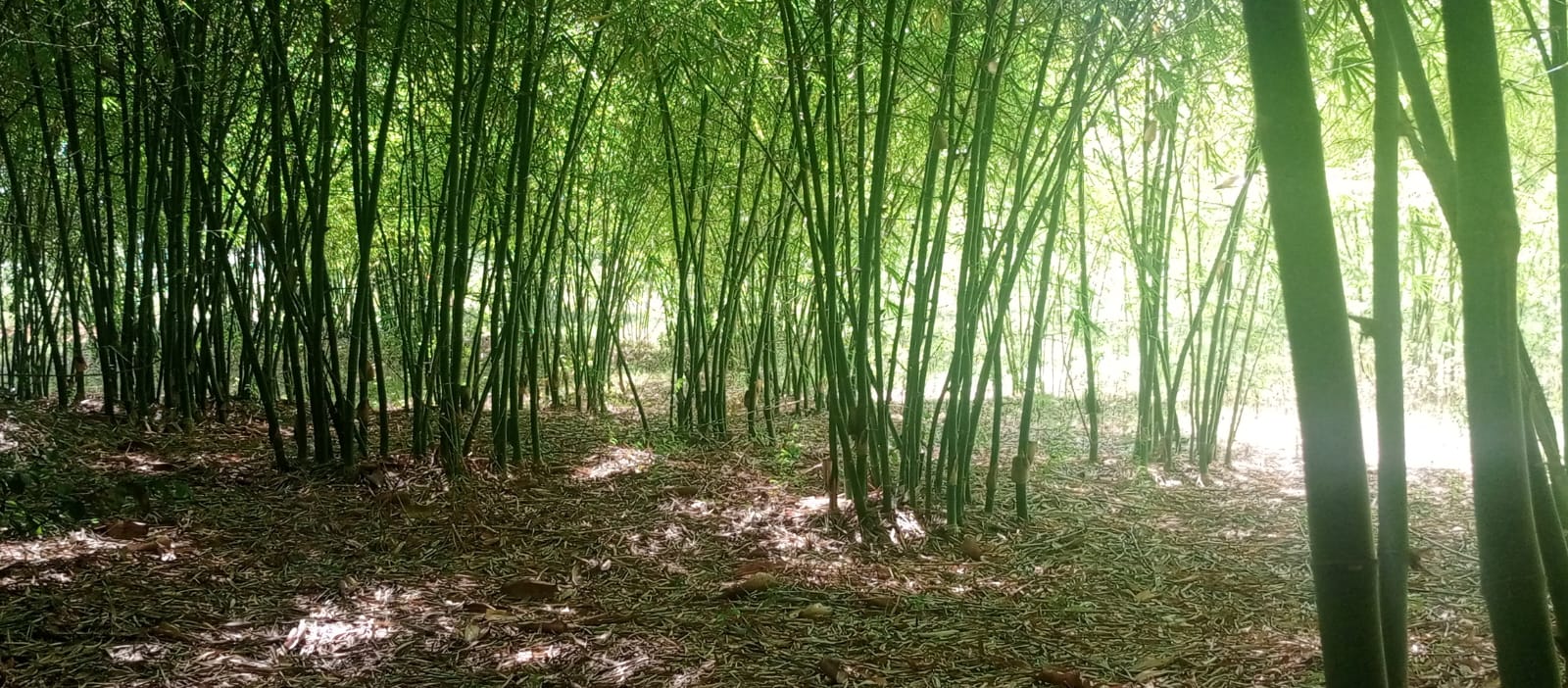
The first thing you notice is the light. It enters the canopy in long, soft beams and lands on a floor of dry leaves and sun-warmed stone. The second thing you notice is how quiet it is. Bamboo this dense absorbs sound the way a good wool sweater absorbs cold. Step inside the stand and the ordinary noise of the road is just gone.
Charles Cardovillis, our Managing Director for Africa operations, walked into that quiet a few weeks ago with the team. The visit was a long time coming. The Busia EcoGreen Bamboo Carbon Project is the kind of work you really only understand on foot, under the canopy, listening to the cooperative members talk about land they have spent a decade coaxing back to life.
A decade of restoration, already done
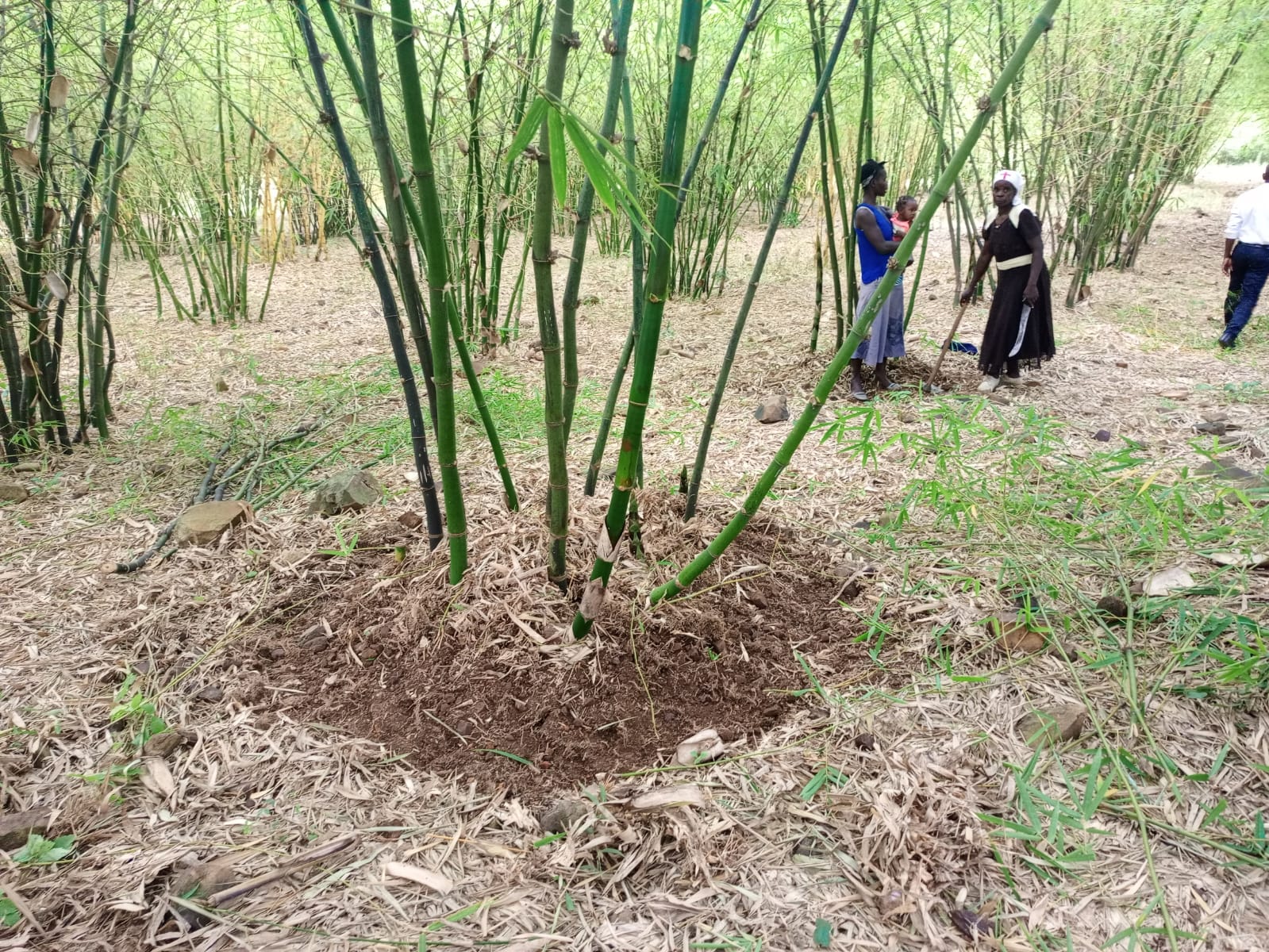
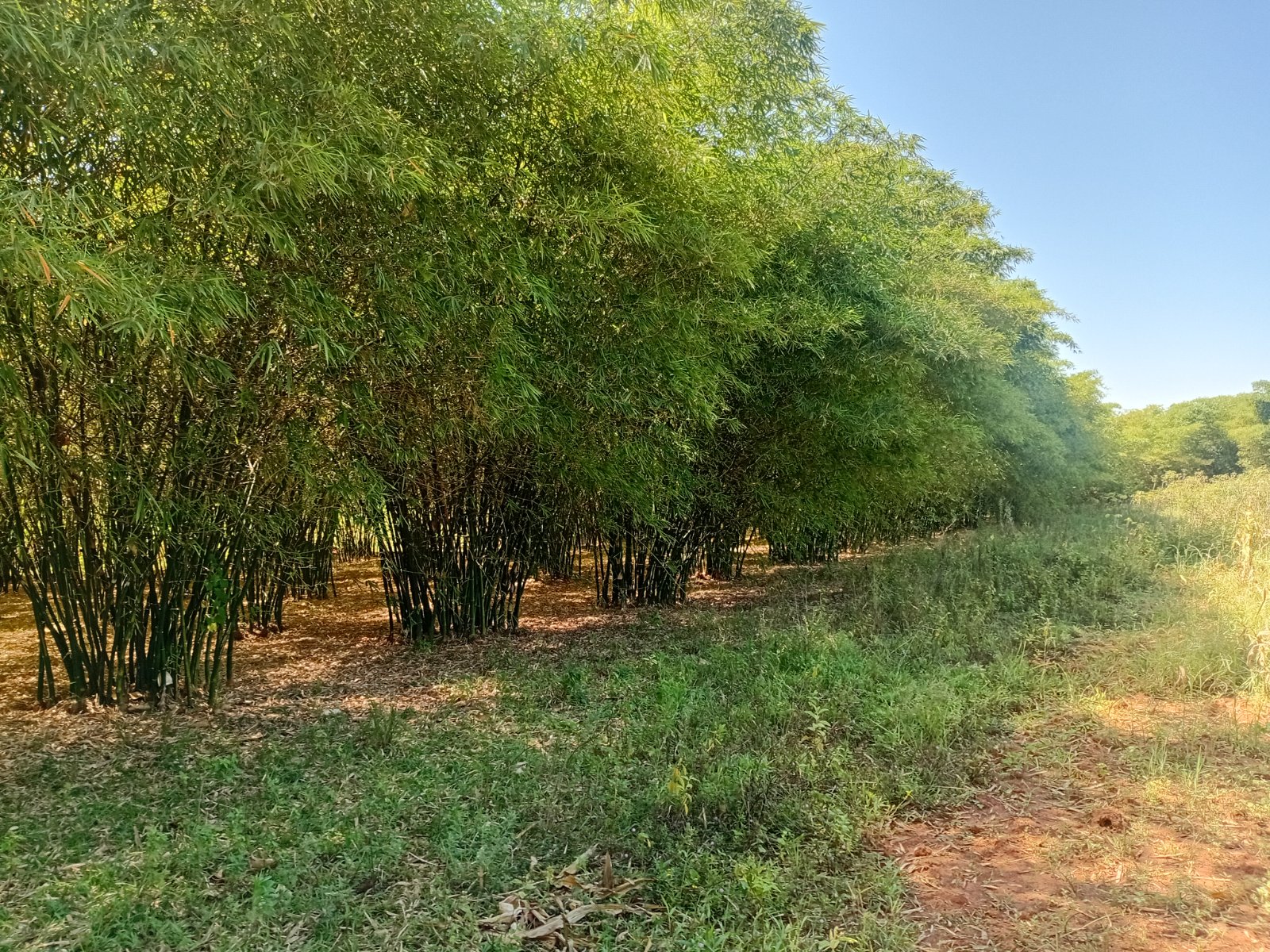
Three thousand smallholder farmers. Six thousand acres of rocky, riparian, and marginal land. The kind of ground most agricultural programs write off. The cooperative did not write it off. They planted bamboo, slowly, plot by plot, on the terraces and along the riverbanks where almost nothing else would grow.
Standing inside one of those stands today, it is hard to picture what was there before: stones, exposed laterite, a few stubborn shrubs. What you see now is a managed carbon sink, cool and shaded, with mulch building under your boots and a canopy thick enough to hold its own weather.
The Vintage Credit question
Most carbon projects only look forward. They count the trees you plant after the contract is signed. By that logic, ten years of community-led restoration done quietly, without finance, without recognition, simply does not exist.
EcoGreen is built on a different premise. Using the VM0047 Vintage Credit methodology, we can formally credit the additionality these farmers have already provided over the past decade. The bamboo is real. The sequestration is real. The methodology lets the carbon market finally see what the land has been doing all along.
At a glance. 3,000 smallholder farmers · 6,000 acres of restored marginal land · VM0047 Vintage Credits pathway · 40,000+ credits potential · downstream outputs in bamboo furniture, biochar, and eco-cutlery.
The cooperative, sitting under the canopy
Halfway through the visit, the team sat down with cooperative members for a long conversation. Plastic chairs arranged in loose rows under the bamboo, the canopy doing the work of a roof. The conversation was about price floors, about traceability, about how the next ten years should look different from the last.
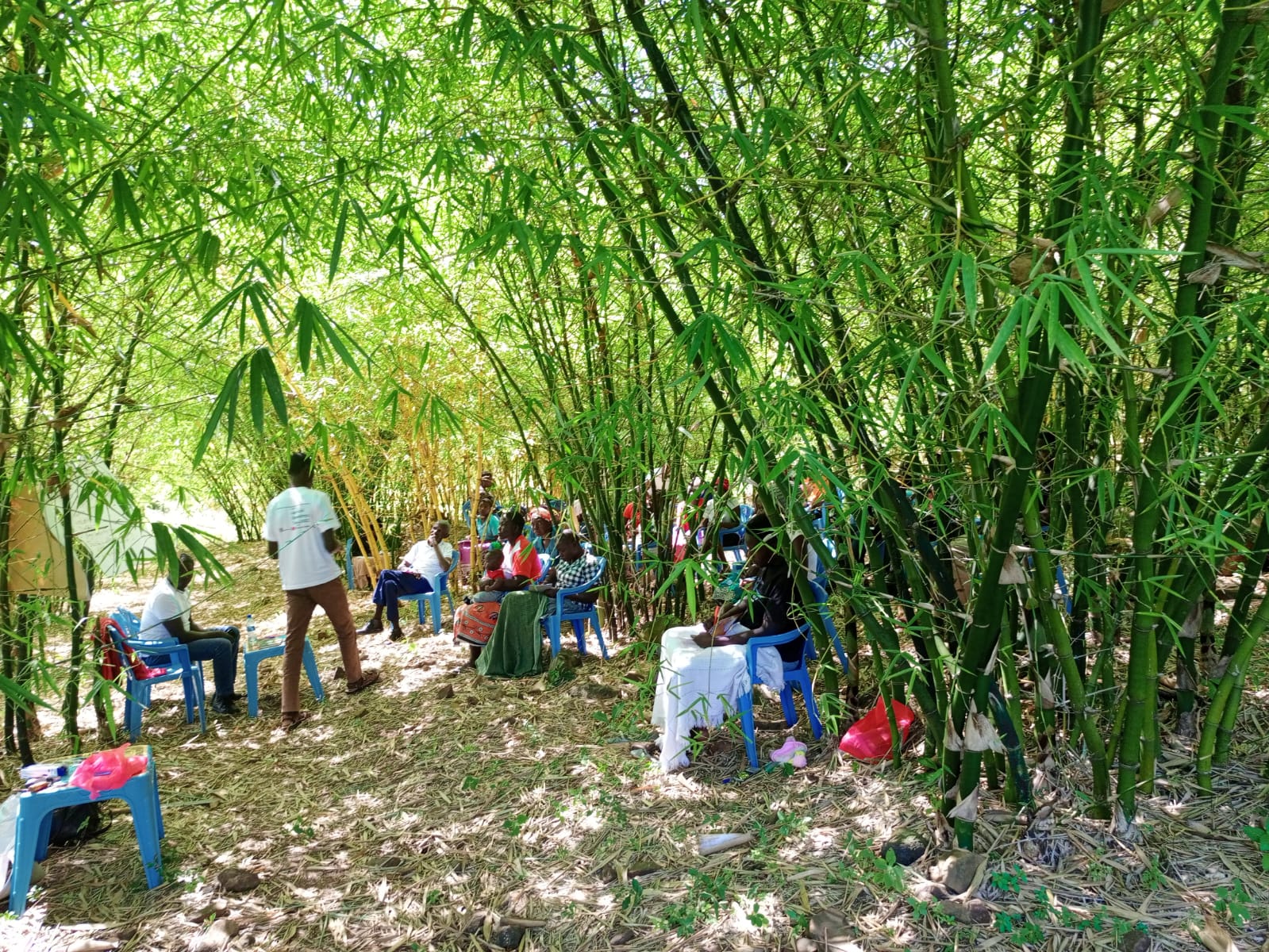
Community first is not a tagline for this project. It is the operating model. The cooperative owns the land. The cooperative decides the harvest schedule. The credits exist because of their work, and the revenue has to flow back to where the work happens.
From standing bamboo to a small industrial base
Bamboo is unusual among reforestation crops because it is also a feedstock. A managed stand keeps growing, keeps sequestering, and keeps producing material you can cut, dry, and turn into durable goods. EcoGreen's plan layers three downstream uses on top of the carbon work: bamboo furniture for regional markets, biochar from the offcuts and mature culms, and eco-cutlery as a low-margin, high-volume export line.
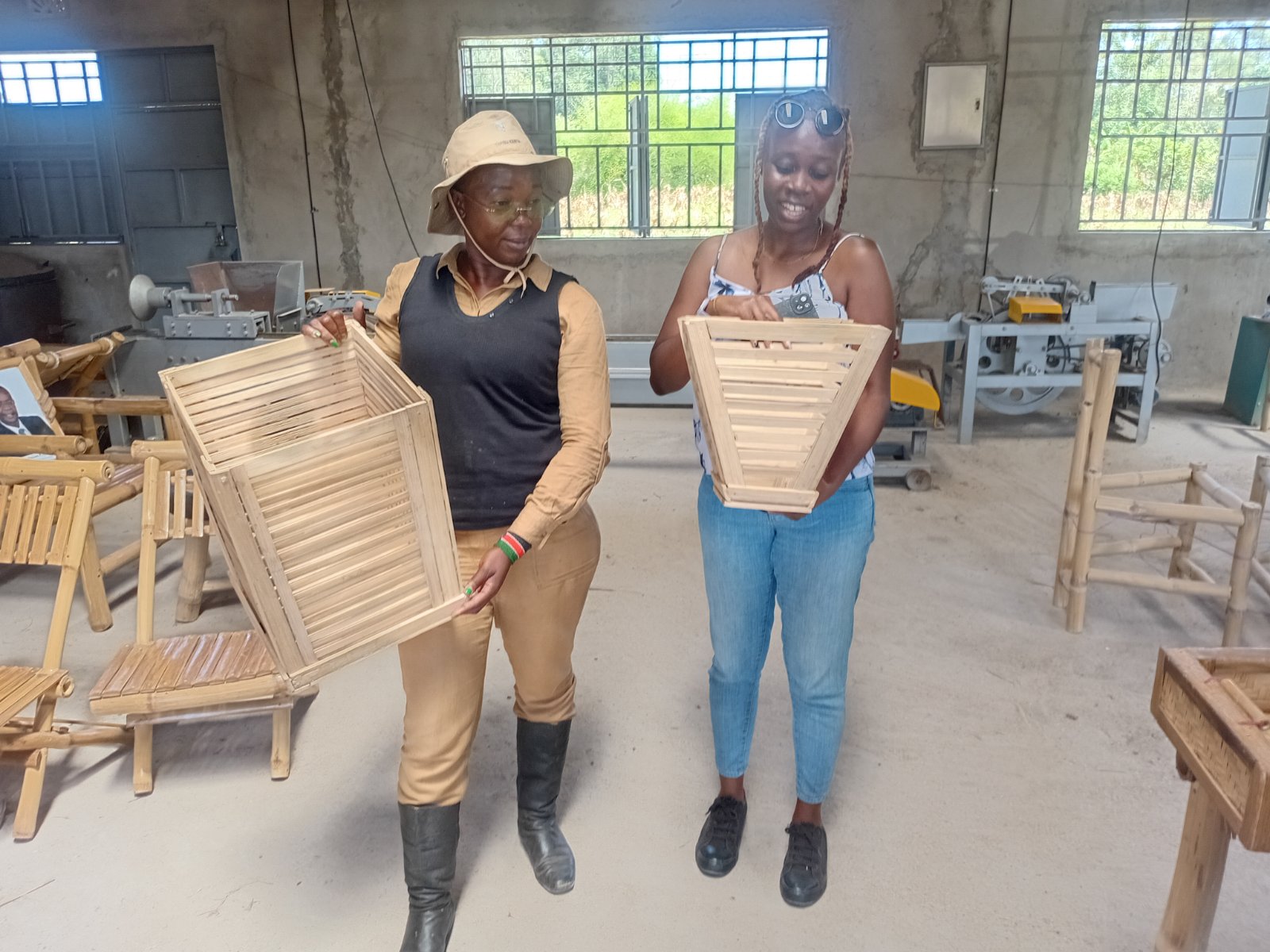
Inside the cooperative's workshop, that plan is already a real thing you can pick up. Two of the artisans walked us through their current batch of lampshade frames. Slats cut from seasoned bamboo, sanded, joined into open lanterns ready for finishing. Bamboo chairs in the background. A press, a slitter, and a strip-cutting machine along the back wall. None of this existed five years ago.
On the display tables: pen holders, woven trays, candle cylinders, picnic baskets, small carved pieces. The range is wider than you might expect from a project still pre-credit. That breadth is the point. Each finished good is a separate path to revenue, a separate buffer against the volatility of any single market.
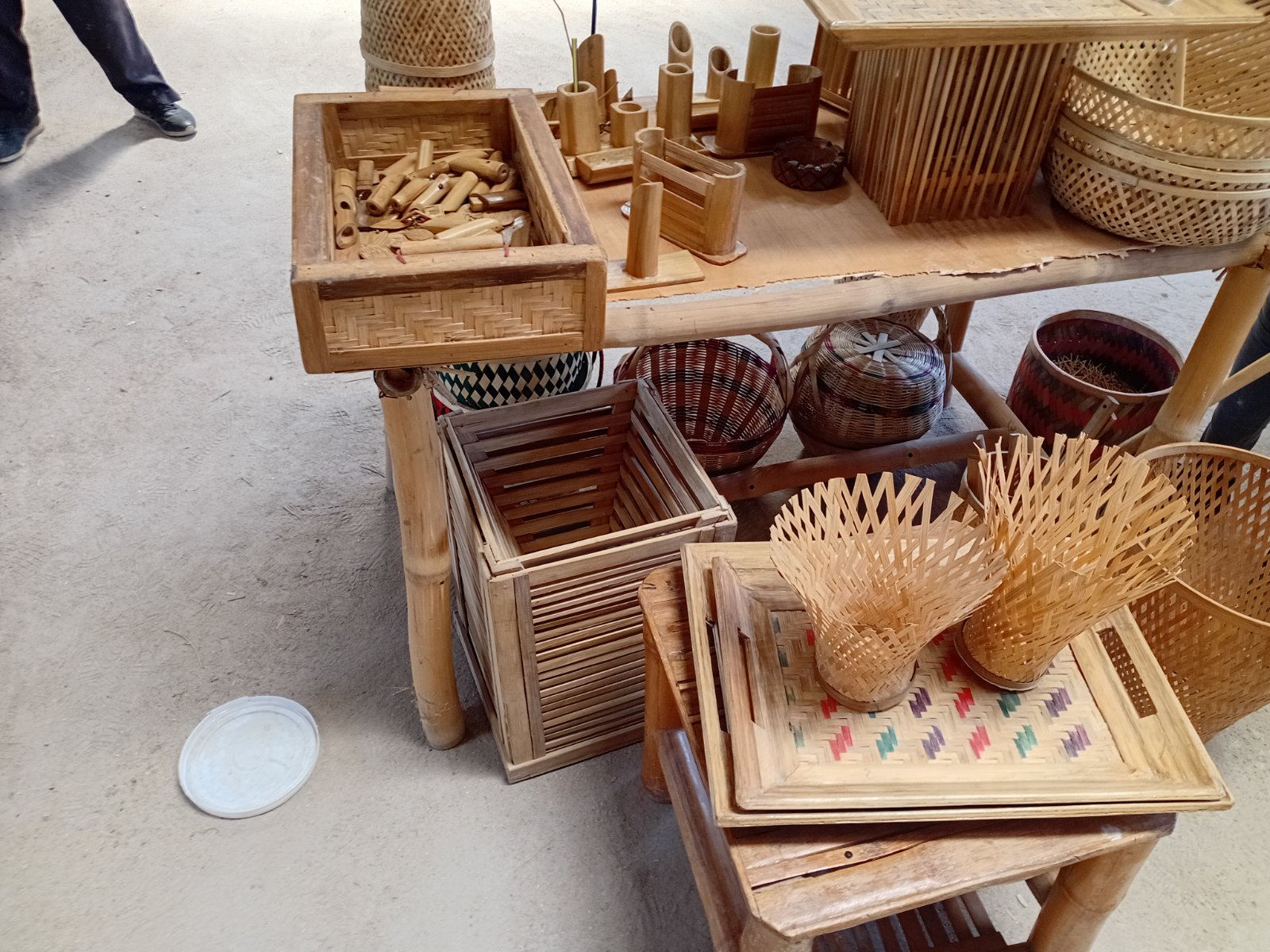
Each of those products is a separate revenue stream sitting on the same forest. Each one buys a little more independence for the cooperative, and a little more resilience for the project.
What comes next
The work from here is methodical: complete the VM0047 documentation package, finalize baseline measurements across the 6,000 acres, and onboard the project into Pamoja DMRV so every credit can be traced back to the cooperative member and the plot it came from.
Vintage Credits are a quiet revolution for smallholder restoration. Busia is where we are going to prove it.
Want to follow this project? Read the project page or explore live data on Pamoja DMRV ↗.